Congratulations to Germany for making OAR work for it

I stayed up way past my Saturday night bed time to watch the white-knuckle overtime period between Germany and OAR (aka Russians who allegedly have past doping tests) for the gold medal. Sadly, I knew that OAR had it in the bag when Germany got hit with a high-sticking penalty because the faster Russians could capitalize on their 4-3 advantage.

Even if they’re just coming home with a silver medal, Germany still has much to be proud of. With or without NHL players, Germany has never been a serious contender in a sport dominated by the Canadians, Americans, Swedes and sometimes, the Finns. Beating Canada to get to the gold-medal match for them is about on par with our Miracle on Ice.

I do hope NHL scouts give all the Olympians a second glance but they probably won’t. I have a feeling Canada, maybe Sweden, will start a campaign to get the NHL to reconsider after how poorly these countries did. Hockey is a source of national pride to our neighbors of the Great White North.

Way to go Germany. Hope you give everyone hard time in 2022.

Posted in Hockey | Tagged | Leave a comment

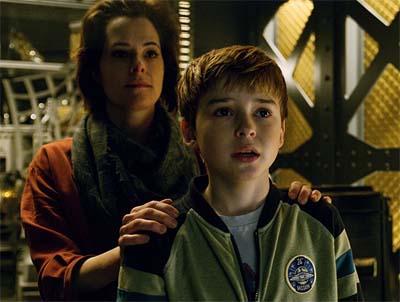
Lost in Space is finally returning…

…and this time Netflix is going to do it correctly and/or better! Indie Poster Child Parker Posey as Dr. Smith. Best casting decision since Gary Oldman.

The new series will have all 10 episodes available on April 13 this year! Given the streaming service’s success-to-failure ratio with their own productions, I have a strong feeling the Robinson family’s saga is finally going to be done well. Personally, after Battlestar Galactica (2009) limped across the finish line, a good Space Opera with decent Science credentials has been wanted. The Orville doesn’t cut it. Star Trek: Discovery is CBS trying to make a streaming business that will fail in the long run, I’m not spending my money to subsidize reruns of Murder She Wrote/NCIS/procedurals for aging Boomers who can’t figure out “how this crap works?” I have no opinion on Altered Carbon or the comedy FuturemanWestworld and The Handmaiden’s Tale are more philosophical than actual Science Fiction. Did I miss anything? Drop me a comment, I’m willing to admit my oversights.

I recently discovered the original Sixties version existing on Hulu. The show’s original pilot is present too, it was a chore to watch alongside the astronomical inaccuracies…an “uncharted” meteor storm is what threw the Gemini 12 of course? Besides, the ship’s name being different, Dr. Smith and the robot weren’t part of the crew and Major West was Dr. West, I think he was the astronomer who specialized in what’s at Alpha Centauri. What else, the voyage was going to be a century, not five-to-six years and the mission was internationally backed. The aired pilot aptly named “The Reluctant Stowaway” had all the elements we know so it was like a reboot unlike Star Trek just going with the sixth episode Desilu had in the can. Even when Jonathan Harris plays Dr. Smith “normally,” he’s still hamming it up a bit. I might stick to the first season until the show shifted to campy. I had seen in it syndication as a kid and I could tell Lost was a rather dumb show compared to Star Trek, Battlestar Galactica and Space: 1999.

As for the 1998 film with the A-list cast: William Hurt, Mimi Rogers, Lacy Chabert, Heather Graham (hubba hubba, she has remained gorgeous), Matthew LeBlanc, Lennie James (Walking Dead), the robot being designed by the Henson Creature Shop and the incredible Gary Oldman as Dr. Smith…it hasn’t aged well. Neither the CG-driven effects or the stilted script from the craptacular Akiva Goldsman (Batman Forever amongst his collection of dreck) just highlight how flawed it was. Despite middling profitability, Lost in Space 2 3 weren’t going to happen so the actors were paid a kill fee. I am going to watch it again soon because it is available on Netflix plus I want to write a new review alongside the short blurb I gave it 20 years ago when Picayune was a magazine and clumsy Web site (remember when frames were a thing?).

There was another attempt in the Aughts I recalled (Wikipedia says 2004). The WB network wanted to take a crack at the story. This had potential as well, the John Woo directed the pilot and a less-famous Andrea Palicki (now Commander Grayson on The Orville) as Judy. The network chose to pass. Good thing WB did. This attempt jettisoned many key elements to the original premise: an alien invasion? John is a war hero, not a scientist? No Dr. Smith? No robot? It was one of those dumb shows/movies that only has the title in common: Hollywood has a list too long to print.

You’ve all been warned. I will be incommunicado from April 13-15 bingewatching a show which has had untapped potential for over 60 years. May Irwin Allen, Guy Williams and Dick Tuffield’s ghosts approve.

Posted in TV | Tagged , , | Leave a comment

Dirty Work

Stumbled upon this mediocre comedy gem from my days as a projectionist 20 years ago. It tanked so it wasn’t around longer than a week or two, thus, I didn’t get a chance to watch Dirty in its entirety. I did recall some zingers Norm MacDonald made via his deadpan delivery I enjoy in his stand-up.

Dirty‘s plot is about Mitch and Sam starting a revenge-for-hire business in order to raise $50,000 for Sam’s father’s heart transplant. Revenge is something Mitch excelled at when they were growing up as a quick exposition shows. I’m not talking murder or assault, more like mean pranks. For example, putting dead fish the HVAC system of a rich person’s house or popcorn in a car’s fuel system.

After several low-paying successes, the duo gets the attention of a local construction magnate Travis Cole by disabling one of his bulldozers set to destroy an elderly woman’s home. Cole decides to drop the charges if they accept a vandalism job on his behalf for $50,000. Obviously they will be double crossed because Cole is played by Christopher McDonald who was often cast as a villain in the Nineties. This leads to a more elaborate revenge plan for Mitch with funnier and grosser results.

Again, the plot and dialog are not the movie’s strength, they’re really the excuse for MacDonald’s style of humor or joke delivery. He makes some great ones to get Dirty tolerable despite Chevy Chase being a minor character. There’s also brief appearances of Adam Sandler and Chris Farley; can’t remember if this was the latter’s final film. Beyond the one-liners, there’s some sight gags and homosexual digs people don’t make any longer.

If you have 90 minutes to waste and/or you enjoy Norm MacDonald’s stand-up comedy, sit through Dirty. Not in the two categories I listed? Then skip it, Dirty may be mildly amusing but it’s a funny movie for a wider audience.

Posted in Movies, Streaming | Tagged , | Leave a comment

Early Man: Worth Seeing

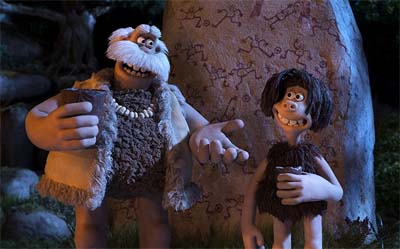
The Wallace & Gromit people’s latest stop-motion, claymation feature is about a tribe of  Stone Age people having to play a game of soccer to win their valley back from an invading Bronze Age civilization.

However, it’s more complicated than the premise. In the movie’s opening, the tribe’s ancestors lived alongside dinosaurs (creative license, not a stance on the Earth’s true age) and one day a meteor struck, burying most residents in dirt/ash. Once everybody dusted themselves off, they were fascinated by a hot, ball-shaped rock and due to the rock’s temperature, they quickly learned it wasn’t smart to hold it. Instead they instinctively kicked the rock, passed the rock and shot the rock through a structure resembling a goal. The ancestors’ activity was saved for posterity as cave paintings…which nobody can interpret. Nowadays, Dug and his tribe are content hunting rabbits and enjoying their valley surrounded by an inhospitable landscape that one day will be Manchester. Then the Bronze Age invaders led by Lord Nooth arrive and evict Dug and the tribe. When Dug is accidentally transported to Nooth’s city, he meets Goona, sees all the wonders of “civilization” (numerous jokes here) and witnesses a soccer match between Nooth’s champions and I think vikings. Dug decides to take the valley back by beating Nooth’s team, Nooth accepts, insert training montage as Goona whips the tribe into shape and it wraps up with the game followed by the comical aftermath.

Early is a predictable movie so what I was more interested in were the technical elements the claymation animators utilized and the jokes inserted to amuse adults and children. It’s very British since they use the term “football” for the sport. I’m OK with it. I just use the American term for my predominantly American-Canadian audience. The movie’s pace is pretty rapid compared to other underdog stories. Heck, the challenge was issued sooner than I expected.

It’s great for kids. Adults? I can only guess those who like Wallace & Gromit and their other outings like Chicken Run will have any interest. Sadly, I fear Early will go down as a flop due to its first week of box-office receipts being pretty low; it was released over the same weekend as Black Panther and Peter Rabbit is doing better than I anticipated.

Alamo Extras: Old cartoon of a dinosaur hunt; Trailers for a horrible movie I can’t remember the title for and Quest For Fire; stop-motion movie from recent past arguing that birds and dinosaurs are related…before this was widely taught; Scenes of other media showing cavemen: Encino ManCap’n Caveman cartoons, Alpha Bits ads, Bic pen ads, Eegah (ridiculed on MST3K), the hilarious “Prometheus & Bob” bits from Nickelodeon in the Nineties, the horrible live-action Flintstones and Ringo Starr’s Caveman flick.

Posted in In Theaters, Movies | Tagged , , | Leave a comment

Black Panther: Must See

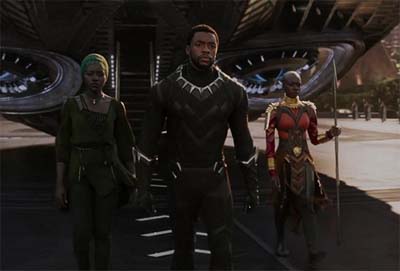
The next chapter in the Marvel Cinematic Universe focuses on Black Panther and the hidden nation of Wakanda. If you recall two years ago, Black Panther made his debut in Captain America: Civil War as he sided with Iron Man’s team because the Winter Soldier may have killed Wakanda’s current ruler. Now the mantle of king and the Black Panther duties fall on our hero T’Challa, who was just doing the superhero part.

I really liked this film because they avoided a repeat of the hero’s journey, something MCU recycled to the letter with Ant-Man and Dr. Strange, they both follow Iron Man‘s script. Black Panther’s journey as a superhero is easy, it’s balancing this role with being the head of state to his own people and the world he has a challenge with. Also, I’m glad he has more depth. When I was a kid, BP was just a B-list member of the Avengers.

So what’s the dilemma? Protecting Wakanda’s natural resources, namely Vibranium, the toughest metal in the MCU (Adamantium is exclusive to the X-Men universe). How tough is Vibranium? Captain America’s shield is made of the stuff. Meanwhile, Wakanda doesn’t allow this national treasure to be exported yet years ago, Ulysses Klaue (the super talented Andy Serkis) succeeded in stealing a good amount and he continues to sell small chunks on the global black market. In the process of trying to stop Klaue, Black Panther is soon fooled because Klaue is a diversion for a more cunning foe.

I’ll stop there since I want it to be a surprise.

Panther has action, humor and proves itself as one of the stronger chapters in the MCU’s larger story, this Summer’s upcoming Infinity War. I loved the rich use of colors in contrast to the Justice League‘s muddy, Instagram filter look. As for the predominantly Black cast some people have their underwear in a knot about. Who cares! It didn’t make me uncomfortable or any of the crap Faux News jibber jabbers about. Wakanda and its people are a character in the story like the Federation in Star Trek or the Millennium Falcon to Star Wars. Is this movie my favorite of the MCU? No, Captain America: First Avenger is but Panther is off to a good start being in the top 10 for MCU. Besides, due to the heroes being people of exemplary character, Captain America and Black Panther are friends/allies after the events of Civil War.

Alamo Extras: Trailers for Meteor Man, Spawn, Blade, Ghost Dog and Yemoja: Rise of the Orisha which are movies starring a Black hero/heroine; Black Panther’s appearances in numerous Marvel cartoons; the scene of stand-up comedian Brad Sanders roasting various members of the DC Universe in Legends of the Superheroes; a tutorial on Black Panther’s history in Marvel comic books; a story about Wakaliawood, where Ugandan action movies are made of a few hundred bucks a piece; an anthology of Black action stars from 1926-79 and from 1980 to now; Angela Bassett kicking ass in Strange Days received its own sequence. Rightfully so.

Posted in Comic Books, In Theaters, Movies | Tagged , | Leave a comment

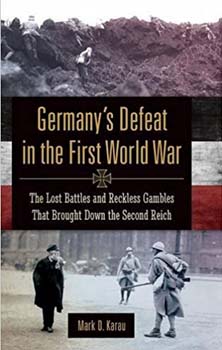
Germany’s Defeat in the First World War by Mark D. Karau

Let me kick off with a couple quick disclosures regarding this review.

  • Over 30 years ago, I attended Marquette with Mark, the author. I was a year older and we were on different degree tracks but we became friends through a mutual couple (Deb & Neal) via D&D/RoleMaster. Afterwards, we catch up at GenCon when it was in Milwaukee.
  • Mark and I reconnected a couple years ago through FaceBook thanks to a mutual friend’s screed. As we were catching up, I experienced mudita over his achievement of a PhD in History along with his tenure. Eventually, we decided to have a book exchange and the title above is what he sent me. How I wish I had something as substantive bearing my name. I went with a couple works of fiction close to my heart.

With those points out of the way, I want to go forward about Mark’s really informative work because this year will be the centennial of World War I ending. Sure, there were details to work out all the way into 1919 with the final peace treaty but the carnage and horrors ended on what we call Veterans Day in the US; the world prefers Armistice or Remembrance Day.

Thanks to a student asking him “Why did Germany lose?” in his Twentieth Century course, Mark was inspired to write Germany’s Defeat after he discovered that there was no concise, informative and accurate books for people like me…non-academics. Much of what I know of WWI is a mix of The History Channel (when it’s not showing “reality” crap), college (partially inaccurate), movies (horrible creative liberties) and my maternal grandfather who was 10 at the war’s outbreak (often colored by what he experienced in rural Illinois). So this isn’t a technical book aimed at Mark’s peers and it is focused exclusively on Germany’s actions with their allies and enemies’ counter moves solely in Europe.

It’s pretty important to know the truth on why Germany lost too. Despite the Nazis’ defeat at the end of WWII, the convenient half-truths and outright lies which helped Hitler come to power continue to circulate 70 years later. Being a Yankee in the South, I experience the same problem with our Civil War 153 years after Appomattox.

As everyone knows, WWI was initiated by the assassination of Austro-Hungary’s Archduke Franz Ferdinand. The killer was an ethnic Serb from Bosnia, a region Austria had incorporated a few decades earlier. Suspecting Serbian skullduggery, Austro-Hungary declared war against Serbia. Serbia responds and gets Russia to declare war against Austro-Hungary. Germany is pulled in through their alliance with Austro-Hungary. Russia counters with France jumping in, opening up a two-front conflict for Germany.

The first question I had was, didn’t former Chancellor Bismarck craft a way to avoid this scenario? He did but after his ouster by Kaiser Wilhelm II, the regime did stupid things to alienate others who were indifferent-to-friendly with the German Empire, namely the UK. Meanwhile the generals, admirals and politicians devised a plan before the war known as the Schlieffen-Moltke Plan to solve the two-front dilemma.

In short, here’s the Schliffen-Moltke Plan:

  1. Rush the bulk of the German Army west via rail and knock France out quickly as they did in the Franco-Prussian War 40-45 years ago. This could be done in a matter of a few weeks.
  2. Minimal German forces with Austro-Hungary will keep Russia tied up. Once France accepts Germany’s peace terms, the bulk of the German Army is then rushed east to do the same to Russia.
  3. Germany and its allies win. Germany will then likely get to annex more land/citizens from Russia’s holdings; Poland, Ukraine, the Baltic states and maybe a couple French provinces.

The clock was ticking on the plan’s viability too. Russia’s ongoing industrialization was expected to improve their deployment into Poland within a few years, thus, holding them back would be more difficult by the end of the decade.

Looking back, it’s easy for us to see that the S-M Plan was plagued with Underpants Gnomes Logic, too many variables between the beginning and the desired outcome. This didn’t matter, the S-M Plan had the result these leaders wanted. For it to work though, Germany had to defeat France quickly because the leadership didn’t have any feasible contingency if the French tied them up for months or let alone years. Sure Germany had the best rail system to shuffle its forces and the average German soldier was better trained than their French, UK or Russian equivalent. But it doesn’t mean squat when your opponents’ population is greater; doesn’t need to import much war materiel, food and fuel; and has access to the Atlantic Ocean. In the end, it didn’t matter anymore, both coalitions were now acting like drunk frat boys itching for a fight and nobody would back off for fear of appearing weak.

As expected, the S-M Plan unraveled immediately when the French failed to be a pushover and the UK declared war for the German invasion of Belgium; Germany did this to get some of their forces around French fortifications knowing the British would get off the sidelines. In my opinion, Germany’s defeat is 90% certain after the Battle of the Marne (September 5-9, 1914). French and British troops not only manage to stop Germany’s advance toward Paris (the goal), they pushed the invaders back some 30-40 miles (maybe more). Now the warring sides are in a stalemate and the trench warfare we Americans associate with WWI begins; both sides race each other to the Swiss border and the English Channel.

For the next four years, Germany desperately employs numerous strategies that could force France, the UK and Russia to accept peace on Germany/Austro-Hungary’s terms. The immediate problem is time is running out before Germany and its allies run out of food, ammo and other necessities.

Here are their key gambles which fail.

  • The German Navy tries to break the UK blockade in two major battles, the most significant is the Battle of Jutland. Despite the UK losing more people and ships, the blockade stands. The UK wins.
  • The German Navy initiates unrestricted submarine warfare on enemy and neutral vessels. Germany backs off after American complaints/threats. It was also unsuccessful. The losses didn’t affect the UK public enough to matter.
  • Rationing in Germany is initiated. However, who gets what isn’t very equal. Munitions workers get more alongside pay hikes to keep up with inflation. White collar workers, soldiers and non-munitions employees get the shaft. Those with enough money can buy what they want through the Black Market. Resentment at home inevitably happens. The UK blockade strangles the German economy too as there’s less to ration.
  • The German administration proves how incompetent it was by re-allocating the dwindling resources toward winning. Never mind that the infrastructure is gradually collapsing. For example, steel. Whatever steel Germany had needed to be made into munitions. Maintenance of its formerly superior rail system would have to wait, leading toward breakdowns. The list goes on.
  • Hindenburg’s plan to build more factories demonstrated how clueless he was. The ones already at his disposal couldn’t produce more of what the Army needed anyway so new construction depleted what little there was.
  • Germany attempts to bleed the French white through attrition at the Battle of Verdun. France loses more soldiers but Germany’s death toll is pretty close making it a French victory by default.
  • Eventually, the submarine campaign was re-instituted with the promise of its success leading the UK population to demand peace before the American Army arrives. The u-boats make their tonnage quota but it just results in the UK to start rationing food in amounts which were more generous than what Germans were getting.
  • Germany’s involvement in toppling the Czar/Tsar via the smuggling of Lenin back into Russia did get them a favorable settlement and the opportunity to re-allocate troops to the Western Front. It didn’t achieve the effect they desired with France and the UK. What happened to Russia made them more determined to defeat Germany and with the American Army trickling in by 1918, they could.

My second burning question was…what about the infamous Zimmermann note US history books mention in high school? It occurred but President Wilson declared war over the submarine attacks in 1917, not the fear of Mexico joining Germany in the war.

Another thing Mark’s book clarified was how effective WWI submarines were. In short, not much and when the UK started having their warships escorting convoys of freighters, the subs had fewer targets. When I think of a sub, I used to think the WWI-types were similar to the WWII-versions. They weren’t. In WWI, a German sub may be armed with, at most, four torpedoes to sink the enemy. More often they surfaced and sank freighters with the cannons on their front decks. The latter tactic made them vulnerable to warships and according to Mark, not one German u-boat inflicted significant damage on the UK Navy.

While I was reading this, I bugged Mark with my third nagging question. Why didn’t Wilson use America’s position as a neutral state to broker an end to the war? I ask this in light of Teddy Roosevelt doing the same with the Russo-Japanese war in 1905. Turns out, he did after he was re-elected in 1916. He sent envoys to the warring states with the offer only to be rejected by all countries but Austro-Hungary. The rejections contained mostly the same message, “No thanks. We’re going to win soon.” If I just read on, I would’ve seen this in the book too.

In conclusion, I want to come back to the premise of Germany’s Defeat, they lost because their leadership foolishly gambled on ill-conceived plans and strategies which all backfired. The failures then led to further doubling down on winning with even further ill-advised gambles. Inevitably Germany had to sue for peace and when the UK and France really laid on the punitive measures affecting all Germans, the myth of who was to blame was born, what we know as the Dolchstoss Legende.

Germany was going to win WWI but the army was stabbed in the back by Jews, Socialists, Pacifists, etc. The army was never defeated. These internal enemies are to blame until the Nazis came to power to make Germany great again.

Sounds familiar here as America finds its global dominance being challenged by China and the continual erosion our of soft power abroad, traditional allies included.

I want to thank Mark for the book. He helped dispel some of my incorrect assumptions on WWI overall, not just how soundly Germany was defeated, but more specifically the actions and consequences Germany undertook to get there. Much like the Confederacy in America’s Civil War, the Second Reich (Germany’s formal name until 1918), was pretty doomed as soon as the first shots were fired.
Posted in Books, History, Reviews | Tagged | Leave a comment

Stars and Rampage leaving the Pacific Division!

I know this is ancient history given that the AHL All-Star Game is long over and it’s when the AHL’s president makes announcements. I for one am glad about my team getting out of the Puss Division after two seasons. It’s been crap for us and San Antonio because we both play five more games/season than the five California and one Arizona teams. Thus the asinine percentage score determines who’s in first place, etc., instead of traditional points which is how it shakes out for the other three divisions. I despise the intrusion of other sports’ shitty systems to make it more “exciting” such as wild cards in the NHL come playoff time. What’s next? That “Games Behind” crap which really doesn’t matter since Wins are what determines who advances and who will be setting up a tee time in mid April? Points are what separates hockey from the Big Three thanks to its overtime play rewarding the losing side with a point. Overtime losses is what propelled my Stars’ killer season three years ago. They had the same number of wins as the Manchester Monarchs but having one additional OT loss gave us the one point advantage to win the President’s Cup. Even if we didn’t win 48 games outright, our 10 additional OT loss points would’ve still contributed to us having a berth in the playoffs.

Enough ranting there. I’m guessing we’ll be moved to the Central Division thus we get to see the Icehogs, Admirals, Wolves, Marlies, Wild, Griffins and Monsters more often. The Pacific will add the new franchise in Colorado which clawed its way from the long gone, defunct CHL my Austin Icebats were in. So the Avalanche will jump to them for the AHL and St. Louis will likely team up with poor San Antonio. I also think the poor Moose will be moved to the Pacific to prevent the Central from having nine teams while the Pacific has seven. Nothing new on those rumors about Reno, NV appearing to give Vegas a closer affiliate. As long as our divisional opponents play 76 games like us, I’m happier.

Posted in Austin Stars, Hockey | Tagged | Leave a comment

Monsters v. Aliens

I was pretty thrilled to see this movie being available on Netflix since very little made by Dreamworks’ animation studio is interesting. After 20-plus years, they remain stuck in Pixar’s shadow, even with Pixar’s lesser stuff (Cars 1-3, Monsters University, the Good Dinosaur and Brave). This 2009 attempt shows my opinion of DW remains unchanged.

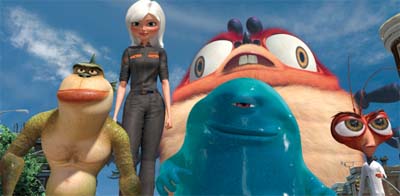
If you haven’t seen MvA, it’s not very deep. A young woman named Susan gets hit by a meteorite that makes her a giant. The government captures her, makes her part of a specialized group of monsters we keep in reserve to fight the unknown. In this case, an alien looking for the substance responsible for Susan’s new size.

It’s mostly padded with predictable jokes. Stephen Colbert is the only bright spot; he portrays a president who is really just a version of his old Colbert Report character. I’d throw in a couple touches of Bush II too since it was released in 2009.

The other element I didn’t like was how the humans were rendered. Somehow they felt off yet they bore some similarities to people from The Incredibles or Inside Out. It wasn’t the uncanny valley thankfully. I think it was their noses and too much blush around their cheeks and chins.

Anyway, chalk up MvA to being another 80-minute diversion to keep your kids busy while you do a chore or regain some sanity.

Posted in Movies, Streaming | Tagged , , , , | Leave a comment

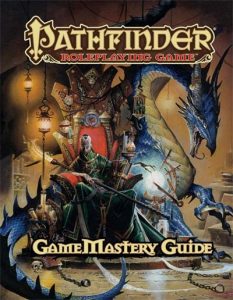
GameMastery Guide

This optional rule book is Paizo’s version of the DungeonMaster’s Guide but is aimed mostly at newcomers and/or starting GMs. I bought it because I’m guilty of being a completist plus there was little for Pathfinder beyond adventures and adventure paths. I did skim it then too. The latter sections were what caught my eye. Now I’m seeing more merit in the book as I’ve been reading GMG at greater length for this post. I should do the same for DMG which I kept; I still reward XP via its Level v. CR table, a couple Prestige Classes were skipped by Pathfinder Core Rulebook and nostalgia.

Chapters 1-3 cover the “science” of being a GM (personally, to me it’s an art, not everyone can do it well, you have to be fearless like public speaking). Demonstrations of how different adventures flow in a linear, non-linear or unrestricted direction. There’s a few pages covering player stereotypes which we all know. Some are multi-classed! Back in Central IL, this one dude was a combination of the Loner (he kept breaking away to have his own personal campaign) and a One-Trick Pony (he would only play an elf with a bow).

Chapter 4 is about NPCs. One cool addition Paizo introduces are Boons; abilities, information, assistance or any other non-monetary way an NPC can aid the players. Examples are favors, discounts and skill usage. Not all NPCs will necessarily offer the Boon for nothing neither. The PCs must reciprocate somehow. GMG gives a page of possible examples from the NPC classes.

Chapter 5 covers rewards with different tables on randomly determining what’s in a treasure pile. These can easily replace what’s in Core.

Chapter 6 is world building. Even if you’re using a published campaign such as The Inner Sea (Pathfinder‘s default), Greyhawk or Forgotten Realms, this fills in the details because those products often just give an overview. What about the weather? Who’s in charge? How about this city?

Chapter 7 gives assistance on making adventures, namely dungeons, aka underground areas where monsters tend to reside. It touches on the Planes (Hell, Astral, etc). Taverns (a staple of Fantasy) get four pages to make every one the players patronize feel a little different. In my game, we have a super detailed tavern/inn acting as a base of operation. Then comes some handy stats on settlements (cities, towns, villages, etc.). The stats help the GM determine how trustworthy the authorities are (if they exist), the strength of the local economy, how accessible knowledge is be it a library or the locals and what the PCs must know, how many possible magic items may be present. The stat block examples are very helpful. The chapter wraps up with water and wilderness-based encounters.

Chapter 8 is about advanced topics which are either things the GM can be blindsided by: drug addiction/drunkenness, natural disasters, gambling and fortune telling/divinations. Then there are the others the GM is prepared for: riddles, traps, haunts, madness and investigations. The latter I find tricky. Why develop detective skills when all you need to do is cast speak with dead to identify the killer.

Chapter 9 closes with an NPC gallery to make the GM’s life easier. Each category contains three NPCs tied to the theme (bandits, crusaders, city watch, caravan, etc.). They’re fully equipped and have an example boon. Paizo has since then used this format and material in several more books called a Codex. I hope to post them too. For me, they’re easy to use as a starting point when I need an NPC/foe in a hurry and Paizo didn’t just phone them in.

GMG is really an optional book in the end. Some of its functions were superseded by later rule books (Ultimate Equipment and NPC or Villain Codex) which may lower its functionality. It recently was released in the $20 pocket version and at that price, I endorse the book. I also need to get re-acquainted with my 3.5e DMG, find some inspiration in the non-rule elements.

Posted in D & D | Tagged | Leave a comment

GM Screen

I don’t have this so I don’t have an in-depth opinion but these days I’m indifferent to GM Screens due to my style of play. I can hide the dice-rolls via my iPhone/iPod. I’m also more about keeping the game moving and spending less time on researching.

Posted in D & D | Tagged | Leave a comment

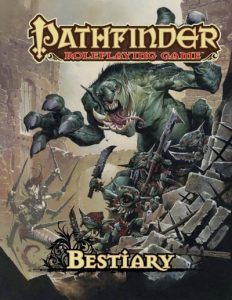
Bestiary

The first of six monster books from Paizo at the time of writing this and the perfect companion for the GM since the players need monsters to encounter and/or defeat.

Originally I had shied away from the Bestiary series because I already owned all the core monster books for 3.5e. There wasn’t much to convert from 3.5e to Pathfinder plus Bestiary lacks some beloved opponents via the “gentleman’s agreement,”: mind flayers, kuo-toans and the Gith races. I did come around due to the convenience Paizo’s books offered through the stat blocks. As I’ve griped before, I don’t agree with the changes to the Undead but it isn’t hard to convert them back to their more superior position.

Another selling point with Bestiary is that Paizo’s take on core monsters is quite different and this is good, otherwise you’re wasting money. The differences between traditional D&D v. Pathfinder is the latter’s art work. Goblins have oversized heads, trolls resemble boars in their facial features, hobgoblins aren’t as tall as humans, etc. Goblins received the biggest alteration for they’ve become Paizo’s mascot. No longer are goblins one of the easy creatures to beat up for starting players. They’re now cunning little things with a penchant for fire, fear of horses and dogs, and an explanation for their illiteracy. In a direct fight, they’re easy to beat but goblins know this and will resort to trickery against the overconfident players.

They didn’t waste any pages on the PC races which is perfectly fine with me. Core Rulebook does a good job explaining the possibilities of encountering a dwarven war party or a halfling caravan. The evil versions are there; drow and duergar have gone down a separate cultural track making them different races.

The last 30 or so pages gives pointers on building your own monsters, showing how they can advance and explanations of their special powers which may not be in enough detail via their entries. Combine it with the Core Rulebook, boom, you can make NPC-like monsters: Orc Fighter, Goblin Sorcerer, Lizardfolk Druid, etc.

Bestiary is a great for new GMs and it also comes in the pocket edition for a mere $20. It isn’t mandatory for 3.5e vets, I’ve found it just saved time.

Posted in D & D | Tagged | Leave a comment

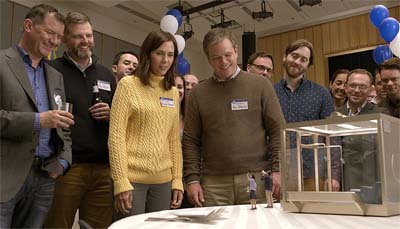
Downsizing: Acquired Taste

Downsizing was another victim of a bad release time (Christmas) and an inaccurate trailer which made it appear to be a Comedy when it’s really a Science-Fiction Satire. Might be why many hardly remember it. I think the movie will go on to a be a cult/small audience favorite like Strange Days or Starship Troopers which are social commentary cousins.

As per the trailer, in the near future, Norwegian scientists find out how to perform cellular reduction which is coined “downsizing.” There’s already a couple macguffins in the idea, namely my immediate question, where does all the mass go? However I’ll entertain the premise. So most living creatures (mammals primarily) can be permanently reduced to 0.0364% of what they were, I think it’s their mass because the scientists say a six-foot man is shrunk down to four inches, this would be to 5.5% of one’s original height. Why do this? The obvious answer is to conserve the world’s resources which in turn would prevent the many impending and ongoing crises the human race faces.

Watching the announcement on the news is Paul, an occupational therapist in Omaha, NE.  Like most Americans he’s amazed but he has to carry on with his life; a big part involves caring for his terminally ill mother. Not another thought is given to the breakthrough.

Ten years go by. Paul’s mother has passed. He’s married to Audrey. They’re getting by on their two-income household, living in the house he inherited from his parents while looking for a new home to start their family. Sadly, it just isn’t in their reach. Then they attend Paul’s high school reunion. He catches up with classmates and mentions how he had to drop out of college to care for his mother. The festivities come to a halt with the appearance of alumnus Dave Johnson, someone who underwent ‘downsizing’ with his wife Carol. Later on Dave and Paul talk privately. To Dave, being shrunk was the best thing that ever happened to him. Dave didn’t do it to save the environment, he did it because he had money problems. In addition to government incentives (no more paying Federal income taxes), your “big” money becomes a vast fortune in “small” money. So the satire element shows how America transforms a scientist’s hope to save resources into a way to save our consumer culture.

After some serious discussion, Paul and Audrey travel to New Mexico where Dave lives…Leisureland, the best of the shrunk colonies. They sit through a sales presentation and then a consultation on how to make the transition. It’s pretty tempting. Their $50,000 in assets would equal $12.5 million along with a McMansion on a 1.5 acre (equivalent) lot. Like Dave, they wouldn’t have to work anymore. They could pursue a life of leisure, learning a foreign language, taking up a sport, etc.

Paul and Audrey return to Omaha, sell off all their belongings, have a farewell party and take the plunge. Before the procedure, there’s some legal proceedings such as understanding there’s a one in 250,000 chance of dying and this cannot be reversed. As per the trailer, Paul undergoes the shrinking and when he awakens, he discovers that Audrey panicked. While they were preparing her, she realized she couldn’t leave her family, her friends and so she bailed.

Another year passes and their divorce is finalized. Paul lost pretty much all the money, resulting in him taking a job in a call center for Land’s End. What happens next, I would say you need to see.

Outside of Paul’s story about adjusting to Leisureland, I really loved how the movie entertained the political issues “downsizing” would bring up. Israel and Vietnam use the process to eliminate their enemies, the Palestinians and eco-protesters respectively. Pundits argue how the shrunk shouldn’t be allowed to vote because they contribute almost nothing to the economy. Homeland Security warns us about tiny terrorists getting into America via consumer goods. Lastly, Paul learns about Leisureland having an underclass of immigrant labor forced to live in a “giant” trailer outside the protective dome. He never realized that his possibly life of luxury still required others to suffer.

If what I’ve written about Downsizing piques your interest, see it as soon as it appears on streaming services or rent via iTunes. Alexander Payne (Sideways) and Jim Taylor (Election) took what could’ve been a cheap-joke premise and make something I felt was more thoughtful. It can be a bit heavy or a downer at times, yet to me, movies should be challenging and make you think. Otherwise, watch the endless joke-delivery shows on TV.

Posted in In Theaters, Movies | Tagged , , | Leave a comment

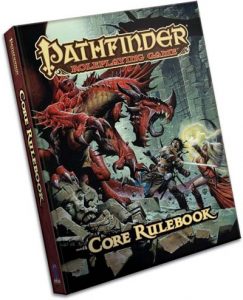
Pathfinder Core Rulebook

As Picayune celebrates Pathfinder turning 10 this year, I wanted to break down the books I have in order of their release. If I don’t have the book, I will have little if any opinion about it to be fair to said book.

After about a year of public input (50,000 comments) and the disappointment of D&D’s 4e, Paizo released their finished Core Rulebook. At $50 and 576 pages, it was a pretty hefty starter book but I think they unified the rules for the players and the GameMaster (GM) because they wanted to give their customers more for their money and avoid violating any understood agreement with WOTC’s tradition; their DungeonMaster and Player books being separate.

So the first 11 chapters of the book (about 80%) is aimed at the players. Rules covering character creation (races, classes, stats), progression, equipment, spells, feats, skills and little details like height, age, etc. The remainder is for the GM: treasures, NPCs, the environment, experience point rewards and how to arbitrate the rules in certain situations like traps. WOTC tended to pad their Dungeon Master’s guide with DM styles, how to deal with a difficult player and different types of adventure flows.

Admittedly, Core‘s size and price does make it less friendly to beginners and aimed at experienced players, especially if they’ve played 3e/3.5e. To me that’s perfectly alright. I’ve argued this before so humor me to say it again. Games like D&D aren’t learned like most board games in which everyone can quickly read the rules on the inside of the box cover. More often D&D is taught by an experienced player to a newcomer, same as Monopoly, Clue or Risk since these are also part of our cultural landscape.

In the last year, Paizo has also re-released Core Rulebook in a smaller, trade paperback format, what they call the pocket edition, for half the price. This helps lower the objections of newer players wanting to drop $50 (never mind new PS4 and Xbox games starting at $60). Being the geeky completist I am, I have both versions with the pocket being my portable on-hand edition I can easily store in my backpack. Paizo does offer Core as a PDF but this format has been rather clumsy on my iPad. There’s also an OGL app yet I remain a luddite who enjoys having a physical copy. Anyway, pocket edition provides significant savings so the newbie can use the spare money for dice, paper and pencils.

As an open letter to my fellow players/GMs, what’s your take on Pathfinder‘s first decade?

Posted in D & D | Tagged | Leave a comment

Dutch potato chips’ flavor

Been a while since I shared one of these I have lifted from my friends the Derrs. So just what the hell is “Classic Burger” flavor when it comes to potato chips? I’m guessing it’s plain-jane potato (with salt) since it’s the closest thing we Americans would serve with burgers. I don’t think we’re that gross or desperate (yet) to want a chip containing the taste of an entire burger in every bite. Ugh!

Posted in Dutch Stuff, Pictures | Tagged | Leave a comment

Mudita

As per Wikipedia, mudita is Pāli and Sanskrit (मुदिता) for “joy”; especially sympathetic or vicarious joy. The better translation from my group leader was “the joy that comes from other people’s joy,” but I’m probably paraphrasing since this was a few hours ago, my short-term memory stinks. Maybe I wrote the Wikipedia entry because I said this word rocks for it’s the perfect counter to the German word schadenfreude.

I love this word and I will be campaigning for it to be adopted into English.

I think most people resorted to what I have often fallen back on over the last 20-25 years.

Wow! You just had your second book published! I am so jealous but in a good way, you know. I am thrilled and impressed with your accomplishment I have to achieve.

I personally believe jealous in this connotation is the better choice. The poison word would then be envious due to envy having a more sinister history.

Who cares now! I have mudita to express what I often feel whenever Somara, my friends, family or co-workers have done something kick-ass!

Posted in Health, News | Tagged | 1 Comment